Two-Handed Swords
Status symbol or weapon of war?
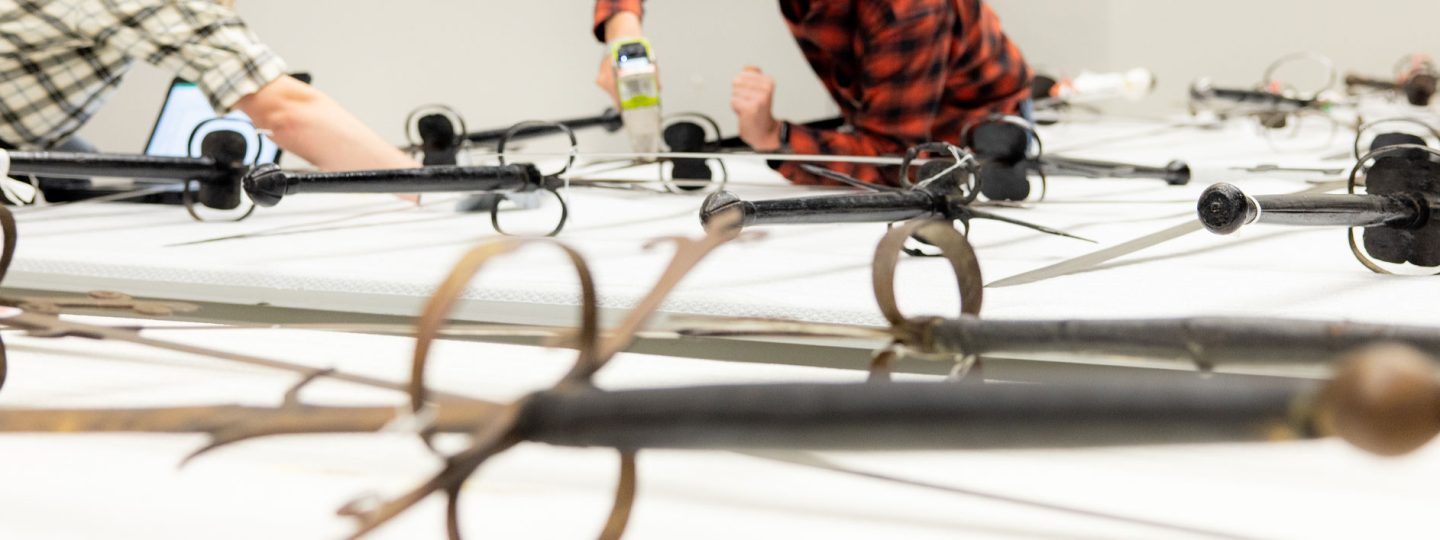
Two-handed swords are massive weapons, measuring up to two meters in length. Were they just status symbols, or were they really used in battle? Curators from the National Military Museum invite you to follow their research.
Actually used in battle?
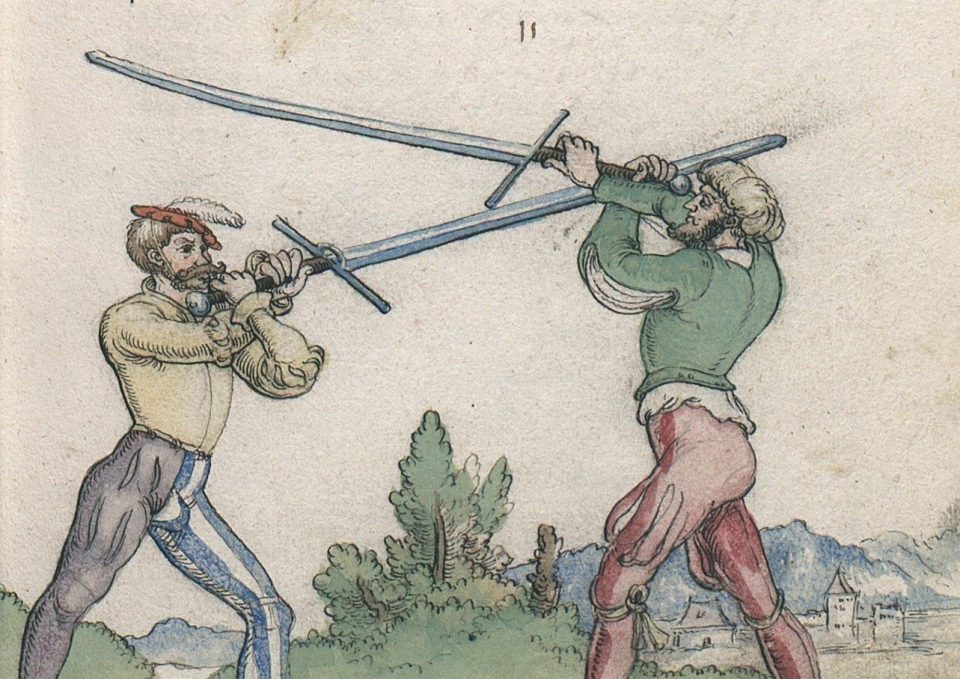
Two-handed swords are immense weapons, sometimes more than two meters in length. They have long captured the public imagination. They are closely tied to legends surrounding the Frisian ‘freedom fighter’ Grutte Pier (1480–1520) and the ‘Watergeus’ (Sea Beggar) Cabeliau, who liberated Brielle (1572). However, the question remains whether these imposing weapons actually served as functional combat weapons or were merely ceremonial objects and status symbols. The curators of the National Military Museum are getting to the bottom of it!
Was the sword of Grote Pier really a weapon?
When we see these giant two-handed swords, we always ask the same question: were they real weapons for fighting, or did they only have a symbolic role? New research in archives suggests that these swords were indeed used in war. However, no one has done detailed research on the swords themselves until now. The research team of the National Military Museum, curators Jeroen Punt and Casper van Dijk, and independent experts are changing this.
The team has already studied more than a hundred two-handed swords from six different Dutch collections. This has led to great discoveries. For example, they found a sword in the Royal Military Museum in Brussels that is exactly the same as Grote Pier’s sword.
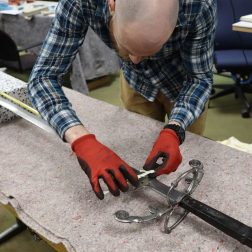
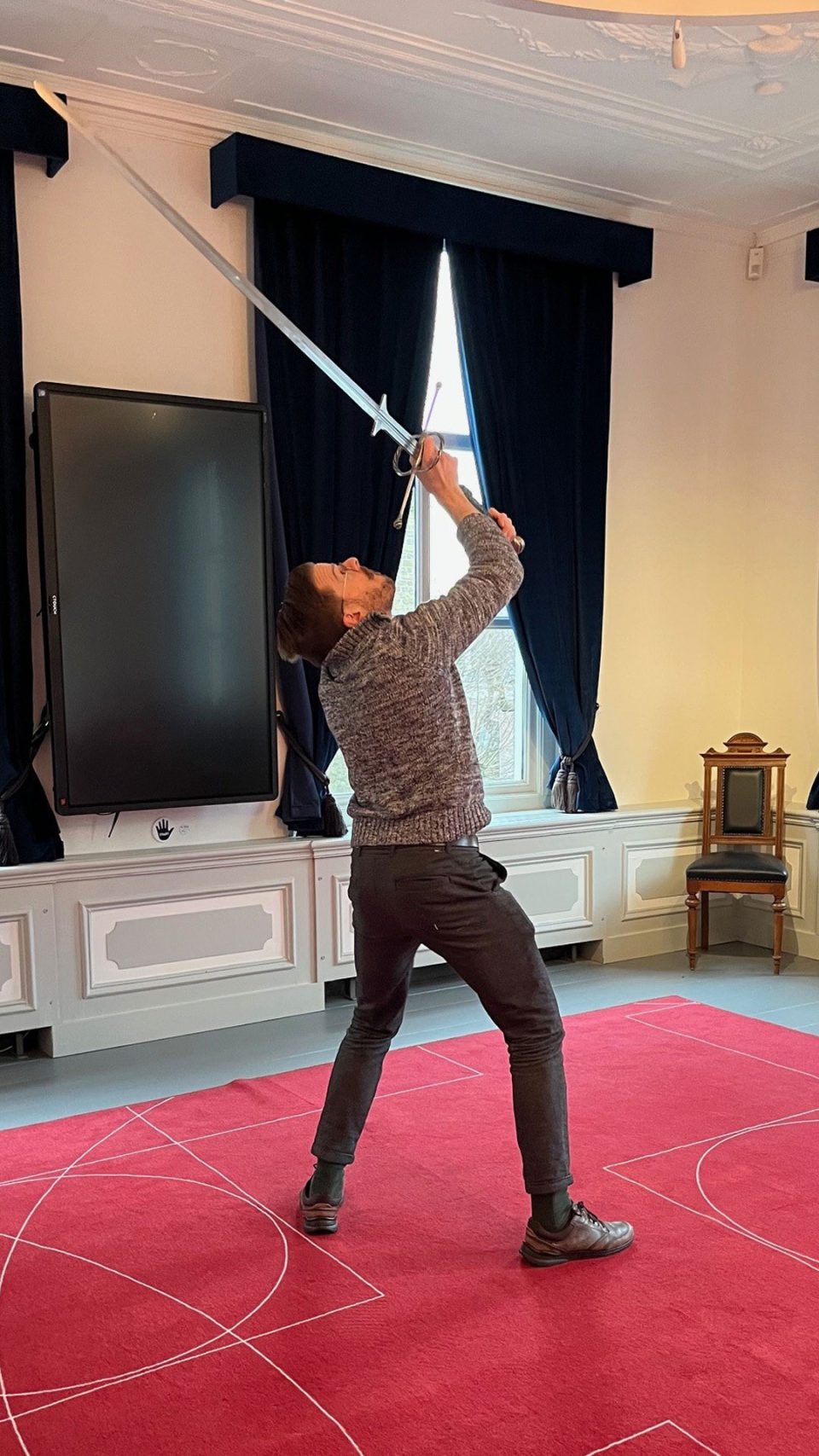
Sword expert at work
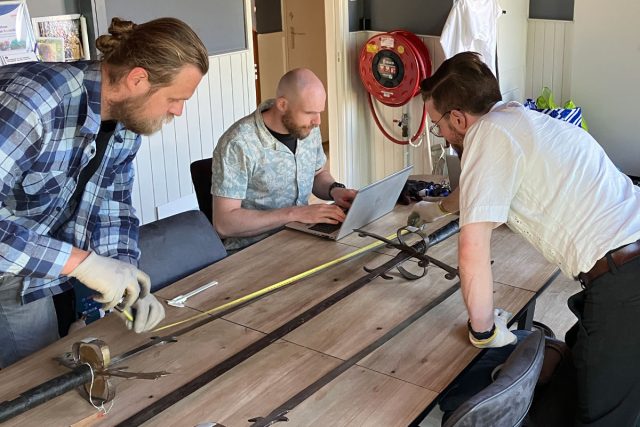
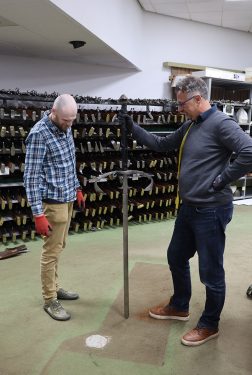
To find out exactly how these two-handed swords were used, the curators are using a unique method. Under strict safety rules, they actually handle the original historical weapons. Van Dijk and Punt are helped by Oskar ter Mors. He is the founder and head teacher at the Wapenkunst Academie Rijswijk. He is one of a very small group of international experts who can handle these swords. He uses the techniques written in 16th- and 17th-century fight books.
Ter Mors’s practical tests give the curators a unique look at how the swords were used. His findings are tested scientifically. The researchers measure the shapes, look at how the swords move (like balance points), check the wear marks, and study how old the swords are. Together, these results will finally answer the question: were these weapons used in real battle or not?
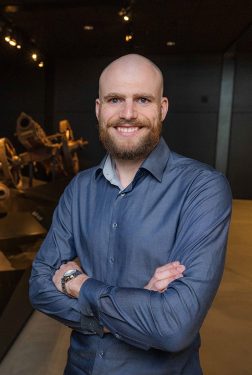
"Only by combining these different research methods—like analyzing shapes, balance points, practical archaeology, and X-ray tests—can we understand how these swords were used in history. We could never get these answers in any other way." Casper van Dijk, curator
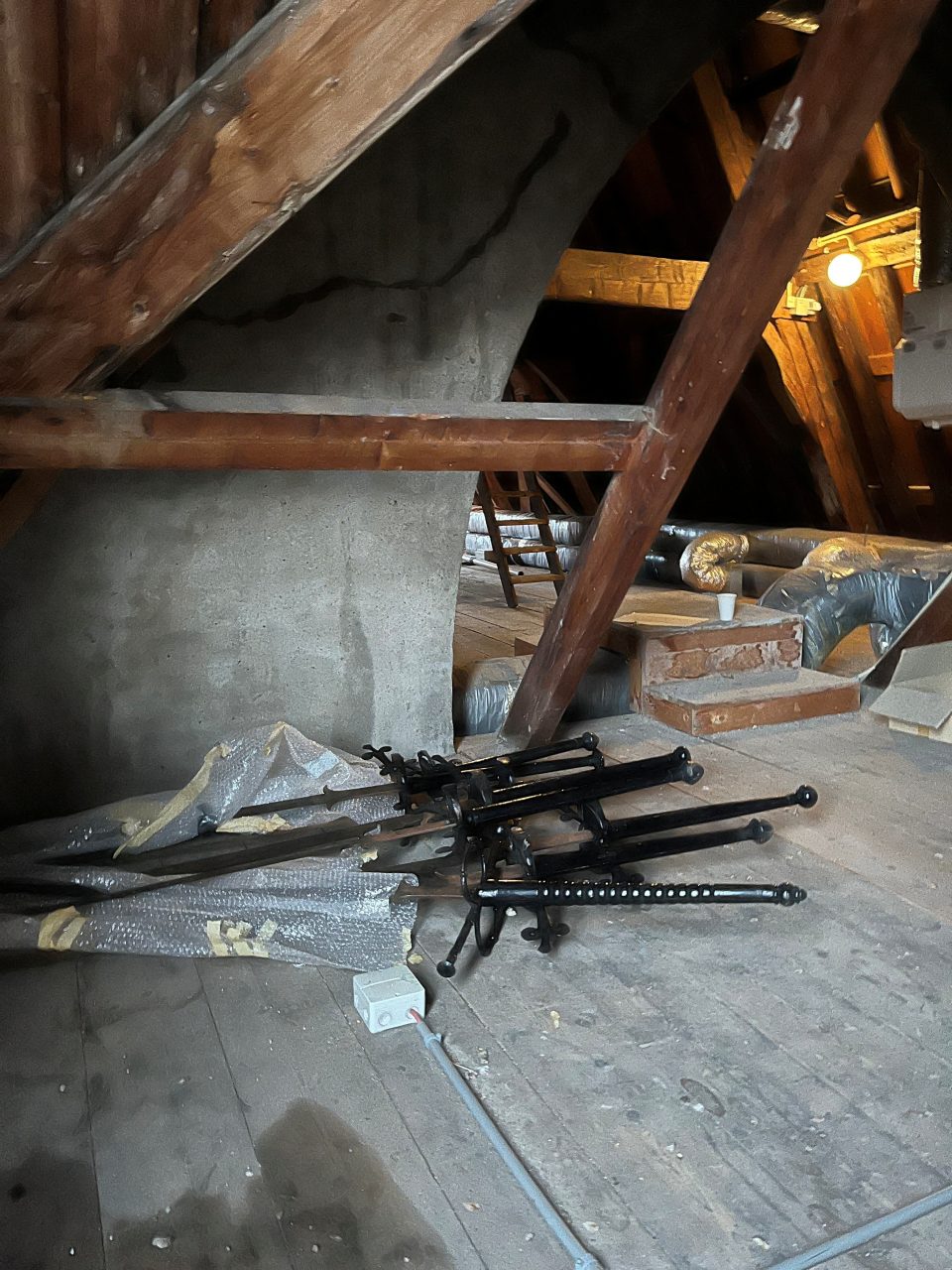
Unique find at Museum Sloten
Ten authentic two-handed swords
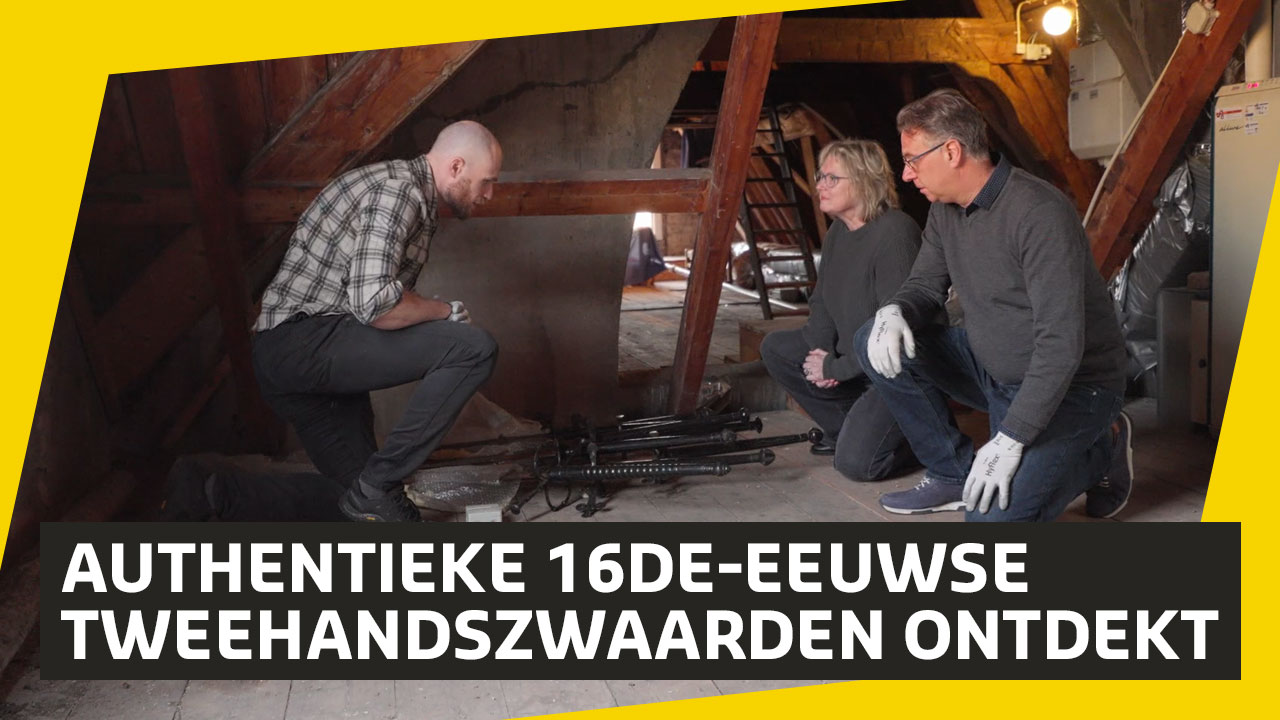
During the project, the team contacted Museum Sloten, which displays a few two-handed swords. The museum staff said there were more swords in the attic of the Town Hall in the nearby town of Balk. However, people thought these were fake or copies. To everyone’s surprise, a quick first look showed that all ten swords were real weapons from the 16th or 17th century. It was a real ‘barn find’! Along with its own swords, Museum Sloten now has the largest collection of two-handed swords in the Netherlands. Late last year (2025), the team did more research on these swords. Oskar ter Mors helped them by handling some of the swords on site.
These ten swords from Sloten give the team valuable new information to compare. The results will be used in the future to study the swords of Grutte Pier, Cabeliau, and Maximiliaan van Bossu. Only this combined method helps us map out, step-by-step, how these large weapons were really used. This takes us past the legends and back to real history.
Research with X-rays
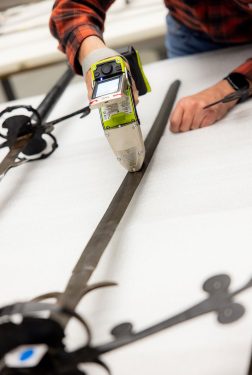
On Monday, April 13, 2026, a special investigation took place at the NMM’s storage facility: XRF measurements on the swords. This method uses X-rays to determine the material composition. An XRF meter is a pistol-like device that, so to speak, creates a “barcode” of the iron composition for each sword. The analysis was conducted by Allard de Bie (a master’s student in archaeology at Leiden University) and Bertil van Os (a materials specialist at the Cultural Heritage Agency of the Netherlands).
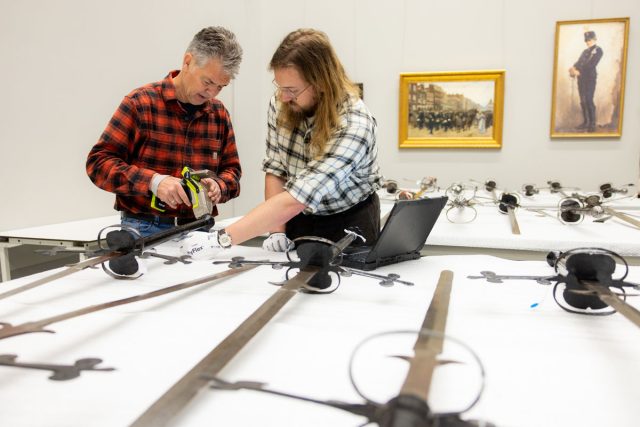
Earlier research by curator Jeroen Punt into the shapes and makers’ marks on the swords points to two main production areas: one around Cologne and one around Nuremberg. The team expects that swords from these two regions will have different metal mixtures. This is because they used different iron ore or production methods. The researchers want to test this idea with the X-ray data.
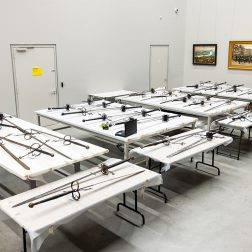
The tested swords come from Museum Oldenzaal, the Westfries Museum (Hoorn), the Ostfriesisches Landesmuseum Emden (Germany), and Museum Sloten—where the swords in the attic were recently found.
Allard de Bie is writing his Master’s thesis on using X-ray tests to find out where historical swords were made. He expects to share his first results this summer. The research is ongoing.
Read more about the research (in Dutch)Four ways to understand a sword
The project combines four different methods to find the truth:
- Archival research: where did these swords come from? When were they used, and by whom? Similar swords in the town halls of Haarlem and Oldenzaal help solve the puzzle.
- Experiential Archaeology: sword expert Oskar ter Mors has more than ten years of experience with historical weapons, especially large two-handed swords. He holds the swords and makes movements as described in 16th-century combat books. His experience gives a first feeling: is it a military object or not?
- Geometric analysis: the famous swordsmith Peter Johnsson developed a theory about the relation between the weight, length, and balance of medieval swords. By applying these standards, Oskar’s intuition becomes measurable and comparable.
- Use-wear analysis: every use leaves a mark. Scratches, cuts, and wear tell a story. By studying the wear marks on the greatswords and comparing them with a 16th-century executioner’s sword, of which we know exactly how it was used, we get a picture of what these weapons really went through.
Follow the investigation on YouTube
Want to know more about two-handed swords and see the research results? (in Dutch)
Go to YouTube